
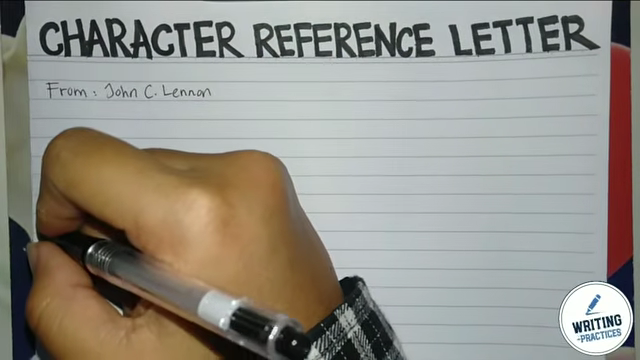
How to Write a Character Letter: Structure, Examples, and 5 Mistakes to Avoid
A character letter is a written statement from someone who knows a person well, vouching for their personal qualities, reputation, and conduct. Courts, immigration officials, and employers all request character letters to see how someone behaves outside a résumé or a case file. The letter carries more weight when it includes specific examples instead of general praise, and follows the format the requesting authority expects.
What Is a Character Letter?
A character letter, also called a character reference letter, is a personal statement written on someone’s behalf to support a legal case, an application, or a decision. Unlike a professional recommendation letter, which focuses on job skills and work performance, a character letter vouches for personal traits like honesty, reliability, and how someone treats other people.
Three situations account for most character letter requests: criminal court proceedings, immigration applications, and, less often, employment or housing applications. A judge, USCIS officer, or hiring manager reads the letter to get a fuller picture of the person than the case file or application alone provides.
Who Should Write a Character Letter?
The strongest character letters come from people who have known the subject personally for a meaningful period of time, not from strangers or brief acquaintances. Common writers include:
- Family members, though a family letter should add details a stranger couldn’t know, like caregiving responsibilities or long-term behavior patterns
- Employers or supervisors, who can speak to reliability and conduct in a professional setting
- Teachers, mentors, or religious leaders, who observe character in a structured setting
- Neighbors or longtime friends, who can describe everyday conduct and reputation
Combining letters from different parts of a person’s life, rather than several letters from the same household, tends to carry more weight with the reader.
How Do You Structure a Character Letter?
- Open with your identity and relationship. State your full name, how you know the subject, and how long you’ve known them.
- Explain your standing. Briefly note your occupation or community role, since it establishes your credibility as a witness.
- Describe specific character traits. Choose 2 or 3 traits and support each one with a short, concrete example rather than a general compliment.
- Address the situation briefly. Acknowledge the case or application without describing legal details you don’t have firsthand knowledge of.
- Close with a respectful request. State clearly what you’re asking the reader to consider, and offer your contact information.
- Sign and date the letter. A handwritten signature adds credibility, even when the letter is typed.
(Image suggestion: template graphic showing the 6-step letter structure. Alt text: “Step-by-step template for writing a character reference letter.”)
What Should You Include in a Character Letter for Court?
A court character letter should address the judge directly, using “Dear Judge [Name],” or “To the Honorable Judge,” if the writer doesn’t know the judge’s name. Keep the letter to one page and route it through the defendant’s attorney rather than mailing it to the judge directly, since attorneys know when and how the court accepts these letters.
Courts respond best to specific, honest testimony rather than blanket denial or emotional appeals. Avoid describing the underlying offense, questioning the verdict, attacking the prosecution, or demanding a particular sentence, since judges read these as a lack of accountability rather than genuine character evidence. In Wiggins v. Smith (2003), the US Supreme Court reversed a lower court’s decision partly because the defendant’s background and character were never presented at sentencing, a reminder that this kind of testimony can carry real weight in an outcome.
(Image suggestion: sample character letter addressed to a judge. Alt text: “Sample character reference letter addressed to a judge.”)
What Should You Include in a Character Letter for Immigration?
An immigration character letter should speak to the applicant’s moral character, community involvement, and expected contributions to the US, since USCIS reviews it against the “good moral character” standard required for naturalization and several other applications.
Naturalization applications typically benefit from 2 to 3 character references, while family-based petitions usually need just 1 or 2 support letters. The writer should ideally be a US citizen or lawful permanent resident with a recognized community role, like an employer, teacher, or religious leader, and should stick to details they know firsthand rather than repeating what the applicant has told them.
How Long Should a Character Letter Be?
A character letter should run one page, or two pages at most, regardless of the audience. Judges and immigration officers read many of these letters, and a letter padded with repetition or unrelated history loses impact rather than gaining it.
Use a standard business letter format: your address and the date at the top, a formal greeting, single-spaced paragraphs, and a signature at the close.
What Should You Avoid in a Character Letter?

Five mistakes account for most of the character letters that fall flat.
- Exaggerating or inventing details. Overstated praise reads as insincere, and judges and officers read hundreds of these letters.
- Discussing the legal details of the case. Writers rarely have firsthand knowledge of the offense or the evidence, so commenting on it undermines credibility.
- Attacking another party. Criticizing the prosecution, the victim, or the opposing side makes the letter read as biased rather than credible.
- Writing only general praise. Statements like “he’s a good person” without a specific example carry little weight next to a letter with concrete anecdotes.
- Skipping the relationship disclosure. Failing to state clearly how you know the subject makes the letter harder to weigh, since the reader can’t judge how much the writer actually knows.
How Is a Character Letter Different From a Recommendation Letter?
| Feature | Character Letter | Recommendation Letter |
|---|---|---|
| Focus | Personal traits and conduct | Skills and job performance |
| Common use | Court, immigration, housing | Job or school applications |
| Written by | Friend, family member, community member | Supervisor, teacher, colleague |
| Evidence used | Personal anecdotes | Work samples, achievements |
| Typical length | 1 page | 1 page |
See our Recommendation Letter Guide if you need the professional version instead.
Frequently Asked Questions About Character Letters
Can I write my own character letter?
No. A character letter must come from someone else who can testify to your character firsthand; a self-written statement carries no independent weight with a judge or immigration officer.
Does a character letter need to be notarized?
Usually not. Most courts and immigration authorities accept a signed letter without notarization, though it’s worth confirming with the requesting attorney or agency.
How many character letters should I submit?
There’s no fixed number, but 2 to 4 letters from different parts of a person’s life generally carry more weight than several letters that repeat the same perspective.
Can an employer write a character letter for a current employee?
Yes. An employer can speak to reliability, conduct, and community standing outside of pure job performance, which makes an employer letter useful for both court and immigration purposes.
Is Your Character Letter Ready to Submit?
A character letter works best when it states the relationship clearly, backs up 2 or 3 traits with real examples, and stays within one page. The letter’s credibility comes from specifics, not enthusiasm, so a shorter letter with one strong anecdote usually outperforms a longer one full of general praise.
Whether the letter supports a court case, an immigration application, or a personal reference, the same rule applies: write what you actually know, and let the specifics do the persuading.
